

Natural stone
Travertine: banded, naturally textured stone
A warm, layered limestone with natural voids, used for floors, walls and outdoor areas.
Material overview
About Travertine
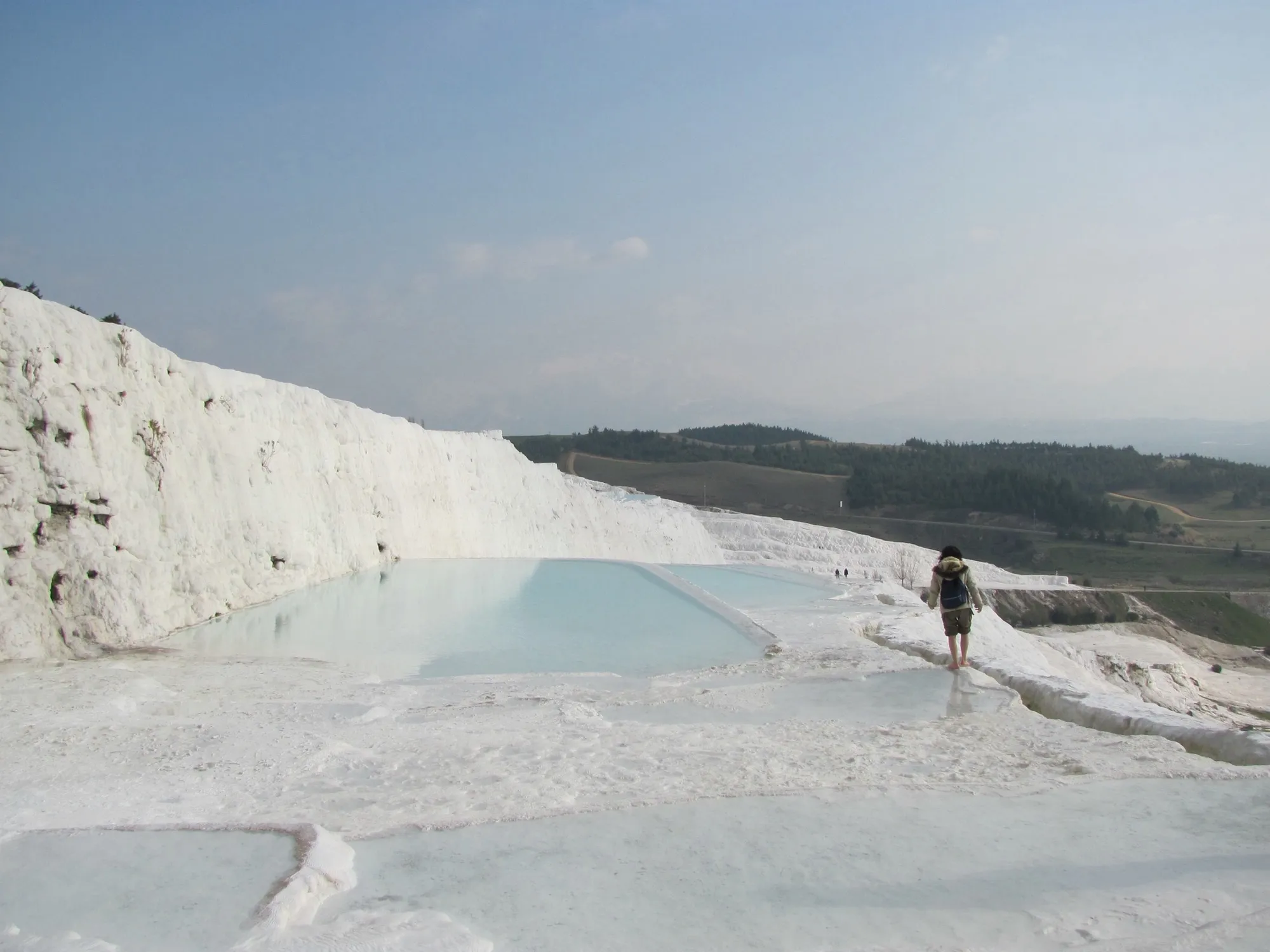
Travertine is a form of limestone deposited by mineral-rich spring water. It is recognised by its parallel banding and the small natural pores that form as it develops.
Available in ivory, cream, walnut and gold tones, travertine brings a warm, classical look to interiors and exteriors. The pores can be left open for a rustic feel or filled for a smoother surface.
Key characteristics
What defines this material.
Natural banding
Linear patterns in warm tones.
Pitted texture
Natural pores, filled or unfilled.
Stays cool
A comfortable floor in warm climates.
Acid sensitive
Like other limestones, avoid acidic cleaners.
Common applications
Where travertine is typically used.
Floors
Interior and covered exterior floors.
Wall cladding
Interior and exterior walls.
Pool surrounds
Cool and comfortable underfoot.
Bathrooms
Floors and walls with filled, honed finishes.
Hospitality interiors
Lobbies and reception areas.
Garden features
Copings and paving.
Common finishes
Finish changes appearance, grip and maintenance.
Filled and honed
Smooth surface with pores filled.
Unfilled
Open pores for a rustic character.
Tumbled
Softened, aged edges.
Brushed
Gentle texture with grip.
Technical information
Typical ranges for this stone family.
| Rock type | Sedimentary (chemical limestone) |
|---|---|
| Density | About 2.2 to 2.7 g/cm³ |
| Water absorption | Typically 1% to 5% |
| Compressive strength | Typically 40 to 120 MPa |
| Hardness | About 3 to 4 on the Mohs scale |
Values are typical for the material family and vary by deposit and block. They are not a guarantee for any specific batch. Request test reports for your project where they are needed.
Project suitability considerations
- Filling: choose filled or unfilled depending on cleaning needs and desired look.
- Cleaning: use pH-neutral products.
- Traffic: for very heavy use, a harder stone may be wiser.
- Direction: vein-cut and cross-cut give different patterns.
FAQ
Travertine: buyer questions
Vein-cut shows linear banding; cross-cut shows a cloudier pattern. Each gives a different look.
Yes, with a suitable finish. Its cool surface is popular for pool decks.
No. The pores are part of the stone and can be filled or left open depending on your preference.
Need Travertine for a project?
Tell us the format, finish, quantity and destination.
Related
Related natural stones
Explore other materials often considered alongside this one.
Enquire about Travertine
Tell us the size, finish, quantity and destination. We will confirm availability and send a quotation. Availability is confirmed per enquiry.
Helpful to include
- Stone type, size, thickness and finish
- Approximate quantity and delivery port
- Timeline and any documents you need